What is watercolour painting?
Watercolour painting is the action of using a paintbrush to mark pressed cotton paper using pigments that have been dissolved in water. The resulting marks are transparent which creates two distinct characteristics of the medium. It lets the light reflect from the surface of the paper and create a luminous effect [1] and it allows the artist to layer thin layers of pigment on top of each other [2].
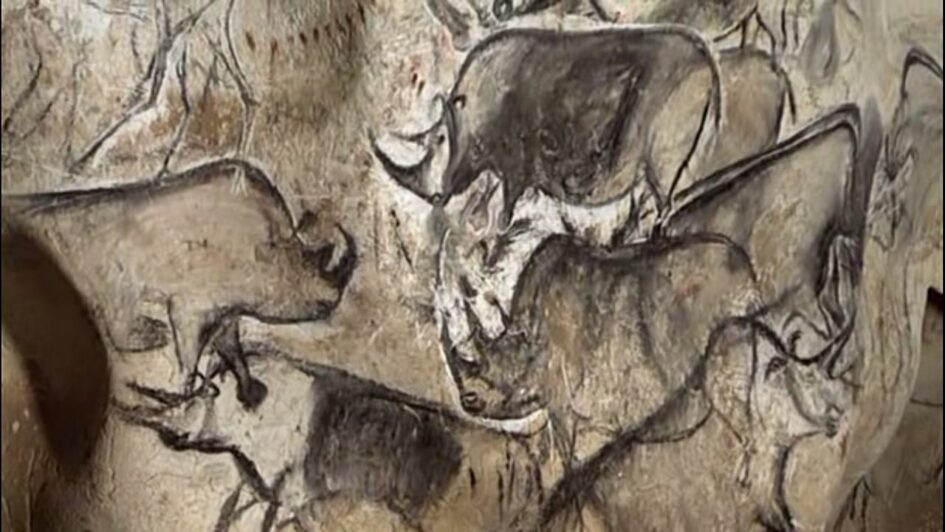
Photo of rhinoceros cave painting found in Chauvet Cave, France 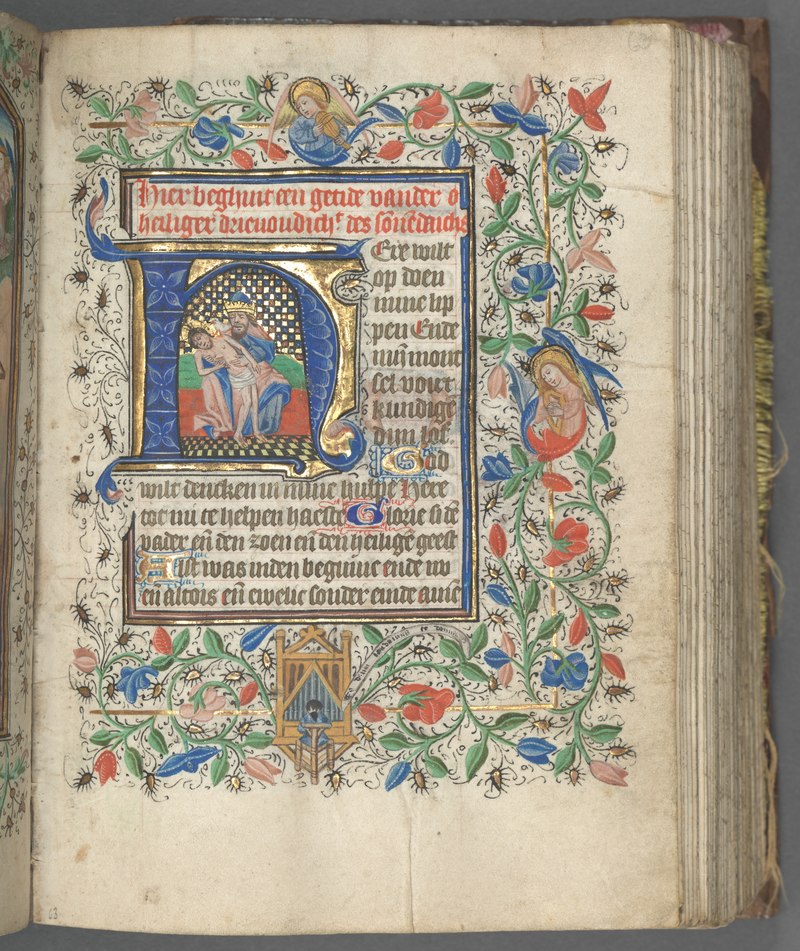
Photo of Illuminated Manuscript (The Book of Hours)
When did it begin?
There is much debate about when the first watercolour paintings occurred. Was it ancient stone cave paintings? Illuminated manuscripts on vellem in the middle ages? Or was it not until paper was first used? In the interest of saving time (and since I am primarily looking at modern watercolour painting and have an interest in landscapes and botanical/zoological paintings) I decided I will only start my history as far back as the 1700s when the manufacturing of pigments and paper began and to focus on artists within those genres.

Hare, Watercolour on paper, Albrecht Durer, 1502 
The Large Piece of Turf, Watercolour on paper, Albrecht Durer, 1503
What was Painted with Watercolour?
Early forms of watercolour were typically used for scientific purposes. Artists like Albrecht Dürer (1471 –1528) from Germany used watercolour for animals, flowers and landscapes because it gave them “greater capacity than oil to render nuances of atmosphere” [3].
The Golden Age of Watercolour (1750-1850)
In Britain, the watercolour landscape painting really took off from 1750-1850 and is known as the “Golden Age of Watercolour” [4].
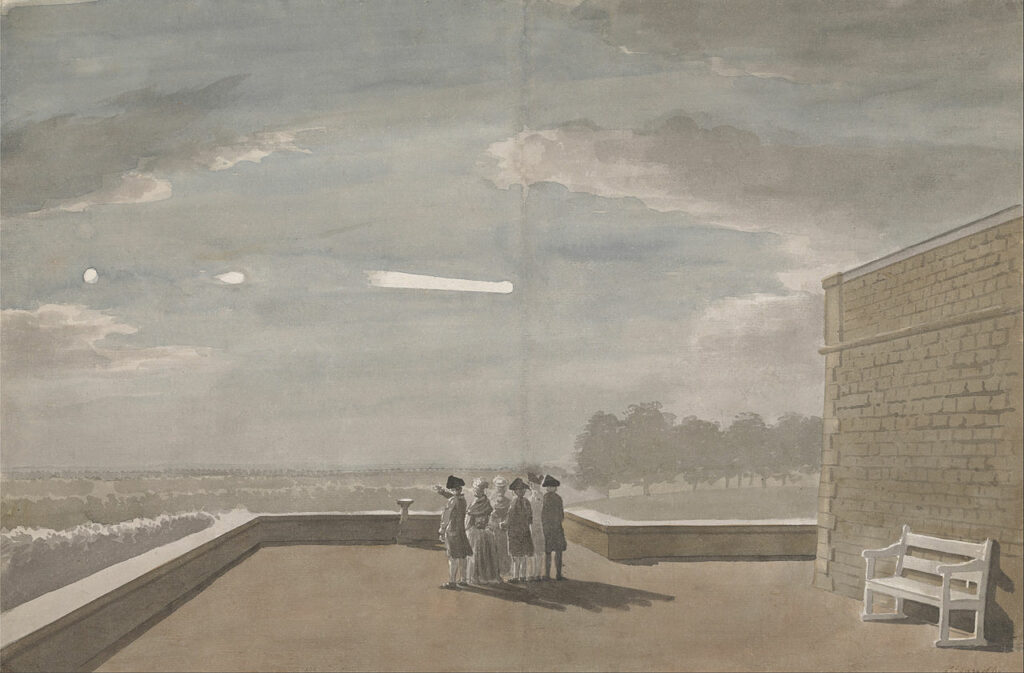
The Meteor of August 18, 1783 as Seen from the East Angle of the North Terrace Windsor Castle, Paul Sandby, 1783
In 1750, watercolour landscapes were characteristically monochromatic topographical drawings that were washed with colour [5]. Paul Sandby continued to incorporate the scientific content into his watercolours as is seen in “The Meteor of August 18, 1783” and paid close attention to the people in his works [6].
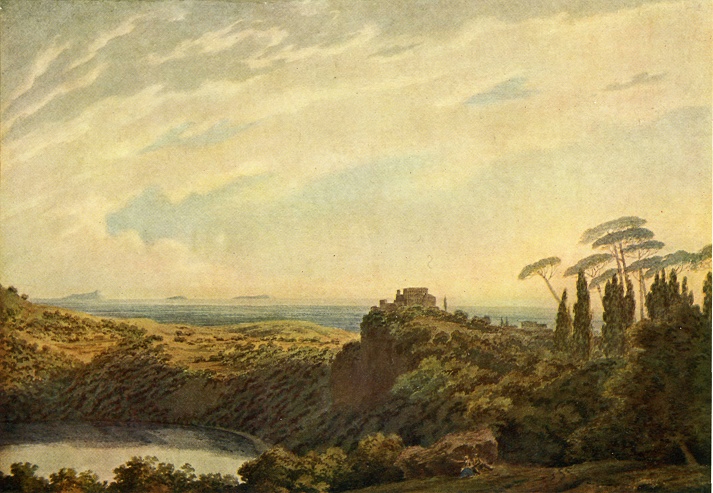
Lake Nemi, John Robert Cozens, c.1783-8
From monochrome, watercolour took a leap into strong colours with artists like Robert Cozens. British artists and scholars popularized the notion of taking a “Grand Tour” of Italy as part of a gentleman’s education and thus paintings of Italian landscapes became common [7]. Cozens is praised for his skies, which dominate his paintings, and how he captured the “riot of colour in the Mediterranean sky” with his expert management of light [8].
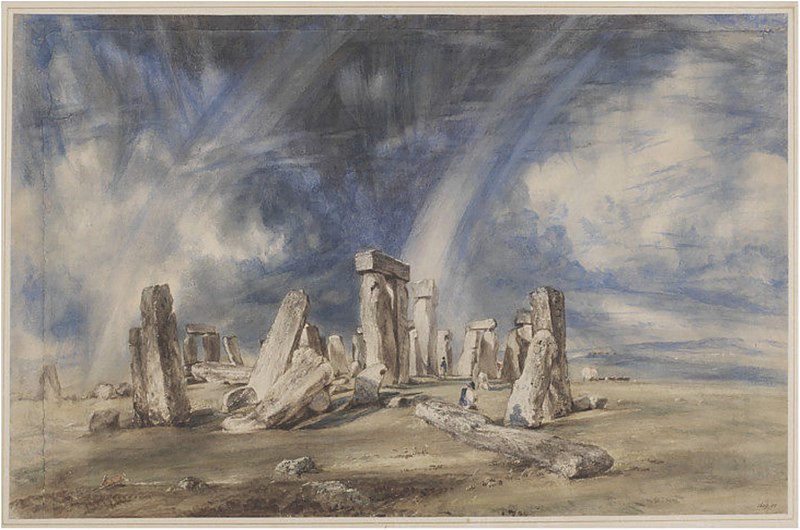
Stonehenge, John Constable, 1835
The Romantic Period (1800)
Freer brushwork and rougher textured paper used to “capture fleeting atmospheric effects” [9] characterize the romantic period. Constable created wind and movement in his paintings with broad brush strokes and bright colours [10].
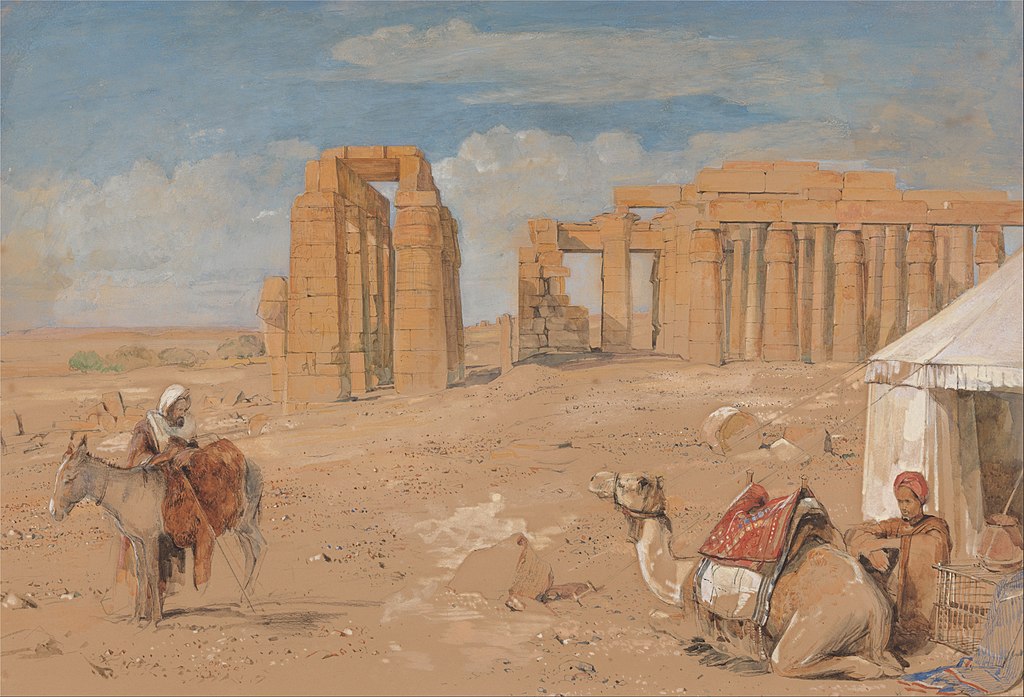
The Ramesseum at Thebes, John Frederick Lewis, 1841 
Shepherds with their Flock in front of the Pyramids of Giza, William James Muller, 1843
Also a part of the romantic movement is the use of exotic subject matter from travels to the middle east and the orient by John Frederick Lewis and William James Müller [11]. They not only played with light in their paintings, but also concentrated on very fine details [12].
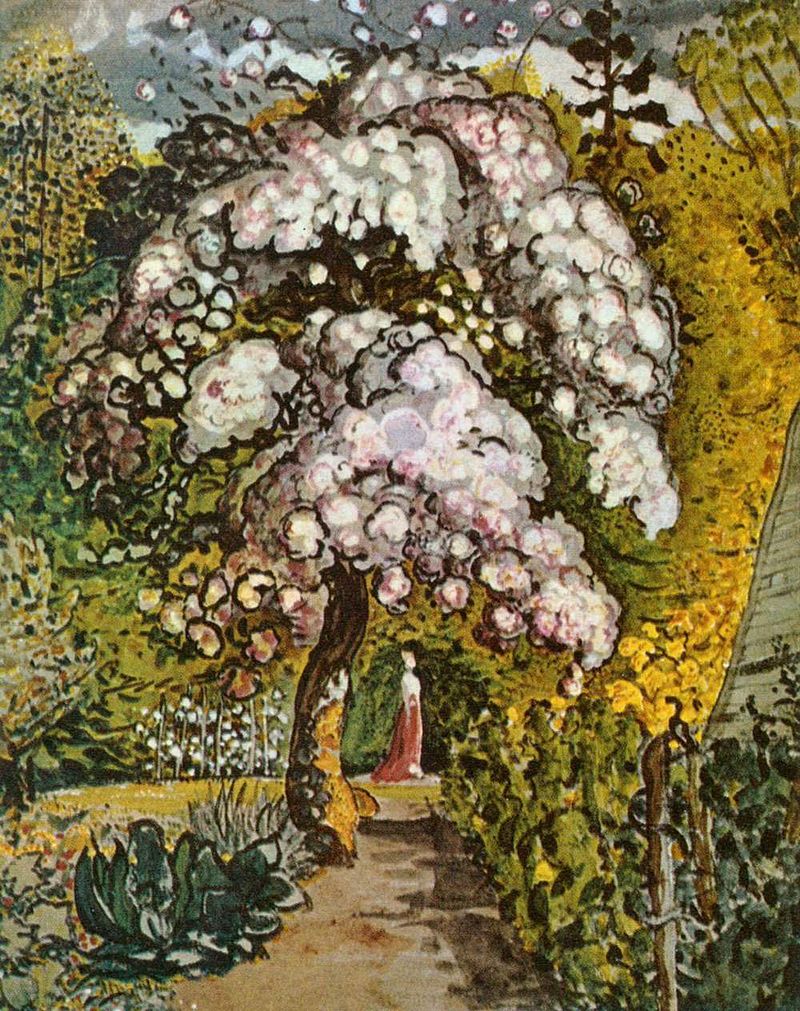
In a Shoreham Garden, Samuel Palmer, c.1830 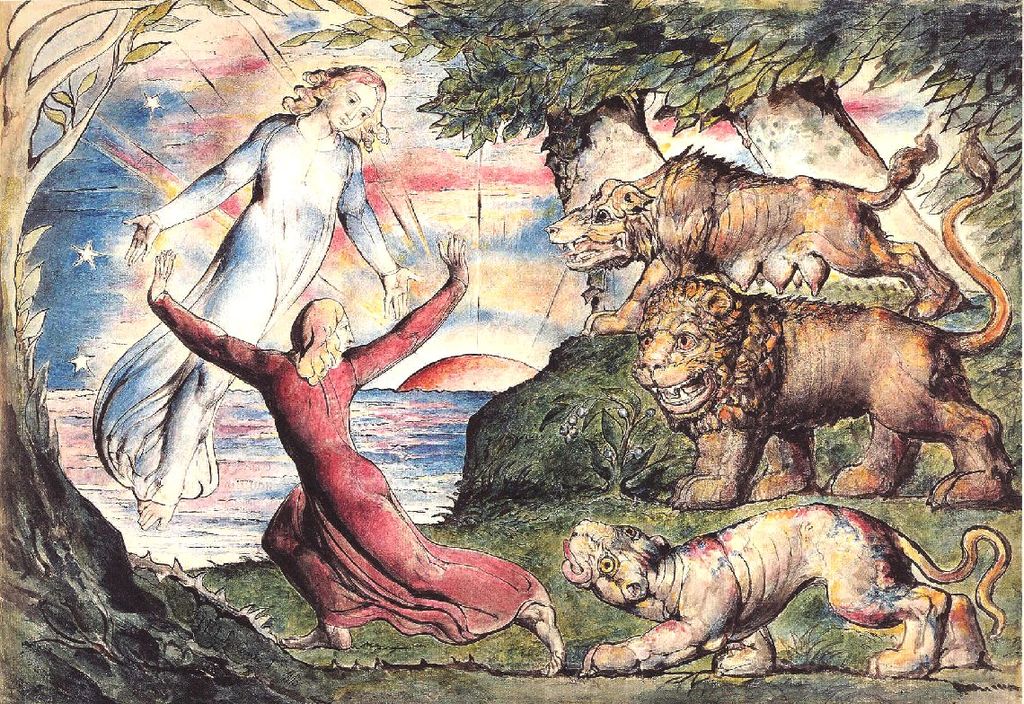
Dante Running away from the Three Beasts, William Blake, c.1824-7
Then, brightness of colours took off with artists like Samuel Palmer and William Blake [13]. They embodied the theme of romanticism with the emotions conveyed in their paintings which are amplified by their usage of colour [14].
Women and Watercolour Painting
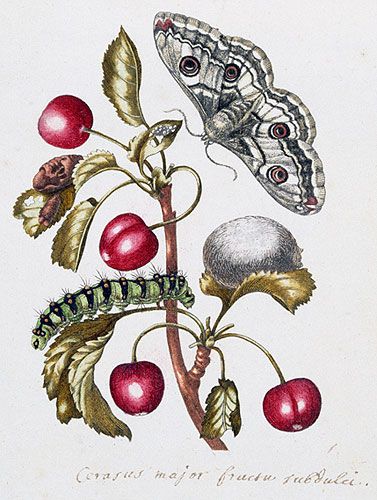
‘Raupenbucher’ (Book of Caterpillars), Maria Sibylla Merian, 1679 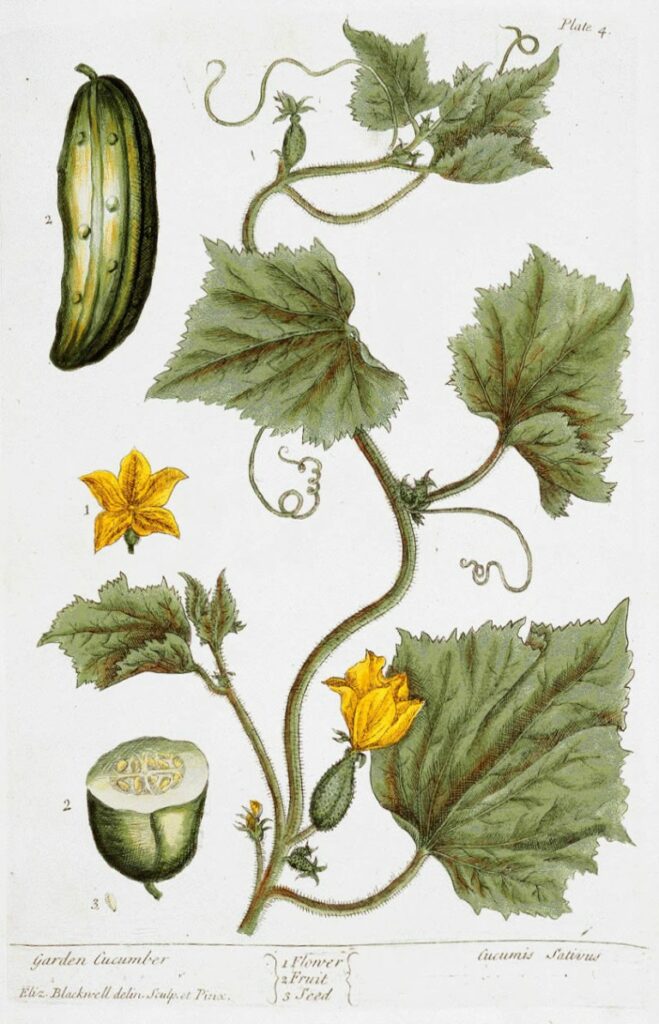
Garden Cucumber from A Curious Herbal, Elizabeth Blackwell, 1738 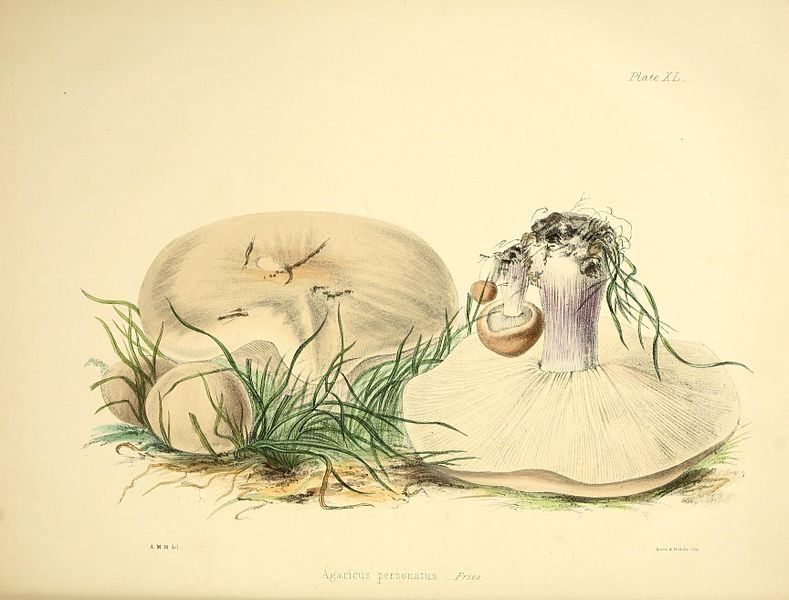
Illustrations of British Mycology, Anna Maria Hussey, c.1847-9
To conclude this march though time I wanted to be sure and mention the works of women. Although their works were not widely known, they weren’t allowed to show with the painting societies, and they don’t hang in the art galleries, these (and many other) women displayed great talent with watercolour painting, particularly in the field of Natural History. As you can see with these three women, they partook in painting botany throughout the 17th, 18th and 19th centuries. Maria Sibylla Merian, Elizabeth Blackwell, and Anna Maria Hussey painted botanical illustrations which were published in books on Natural History [15].
Citations:
[1] Elizabeth E. Barker, “Watercolour Paintings in Britain, 1750-1850,” The Met Museum, October 2004, https://www.metmuseum.org/toah/hd/bwtr/hd_bwtr.htm.
[2] Graham Reynolds, Watercolours a Concise History, (London: Thomas and Hudson, 1971) pg. 8.
[3] Watercolours, Reynolds, pg. 12.
[4] Watercolour Paintings, Barker.
[5] Watercolour Paintings, Barker.
[6] Watercolours, Reynolds, pg. 54.
[7] Watercolour Paintings, Barker.
[8] Watercolours, Reynolds, p. 66-67.
[9] Watercolour Paintings, Barker.
[10] Watercolours, Reynolds, p. 104.
[11] Watercolour Paintings, Barker.
[12] Watercolours, Reynolds, p.113.
[13] Watercolour Paintings, Barker.
[14] Watercolours, Reynolds, p. 78-9.
[15] “A Passion for Plants: Botanical Illustration by Women Artists,” National Museum Wales, 16 June 2007, https://museum.wales/articles/1262/A-passion-for-plants-botanical-illustration-by-women-artists/.
Leave a Reply
You must be logged in to post a comment.