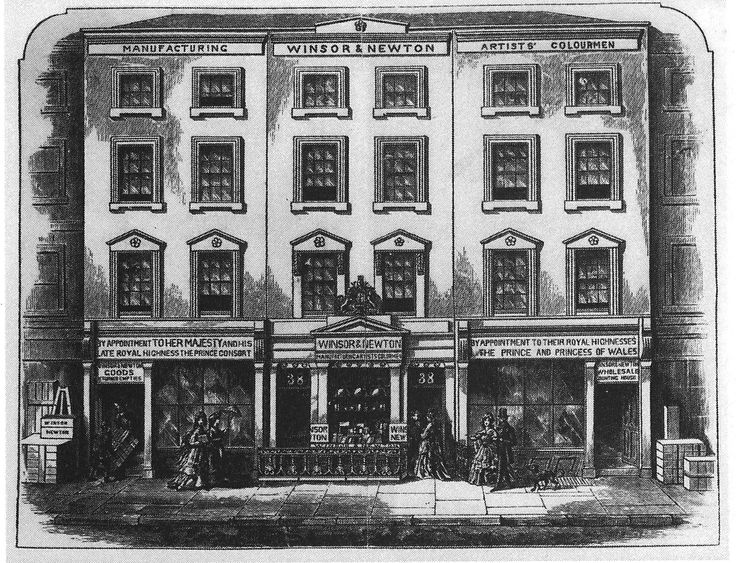
When conducting my research into the history of watercolour painting, I also dove into a history of the tools used in watercolour painting. Then I researched modern tools and used that to inform my purchases and set out to buy some supplies. I had a lot of fun poking around the art store and even got some advice from the store owner (bonus!).
First things first: the Evolution of Watercolour Paint
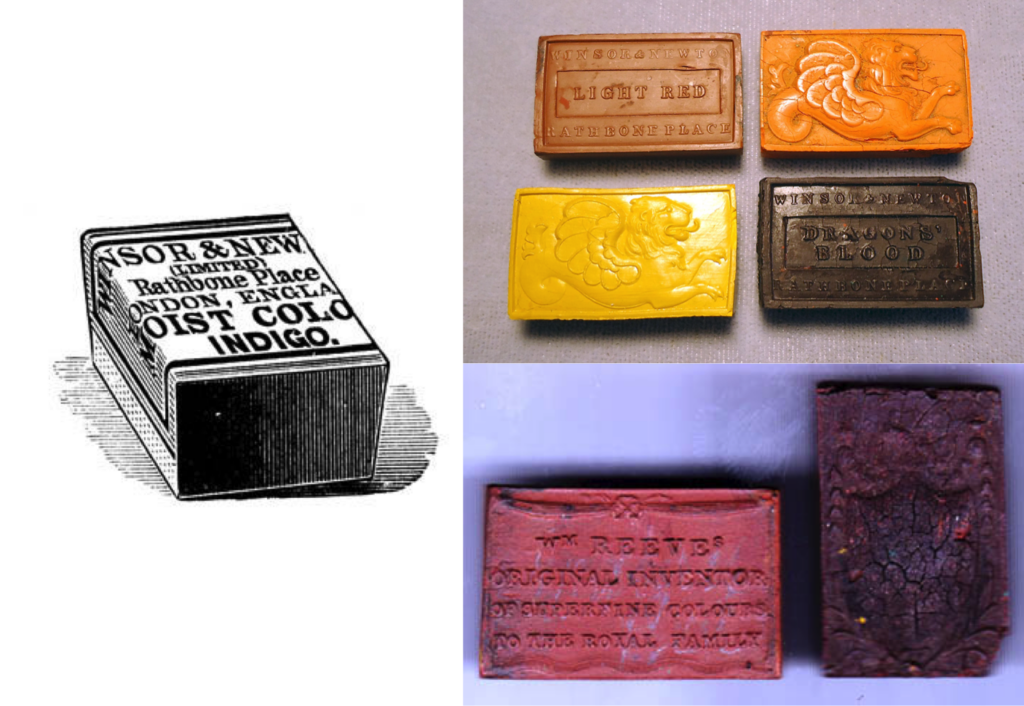
Before the manufacturing of paints began in the 1700s, artists had to grind up their own natural pigments and bind them with a gum substance to make colours that could be mixed with water. In 1776 William Reeves began to manufacture and popularize dry cakes of colour made from basic pigments mixed with resins and oils that were designed to be broken up and mixed with water. By 1781, Reeves produced “brush soluble” watercolours that no longer needed to be shredded and dissolved in water [1].
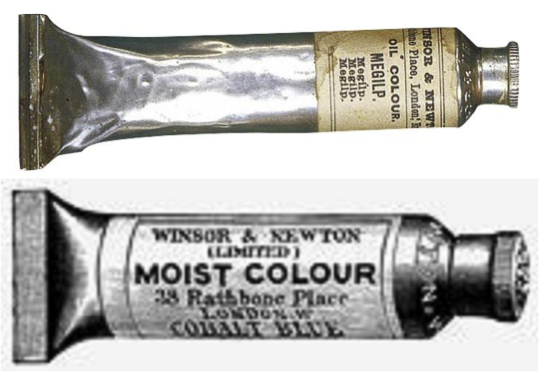
The next innovation was Winsor & Newton’s “moist colours,” which were pigments mixed with glycerine to keep them soft and came in metal tubes in 1846. By this time manufacturers were also using machines to grind their pigments which resulted in more even, saturated colours [2].
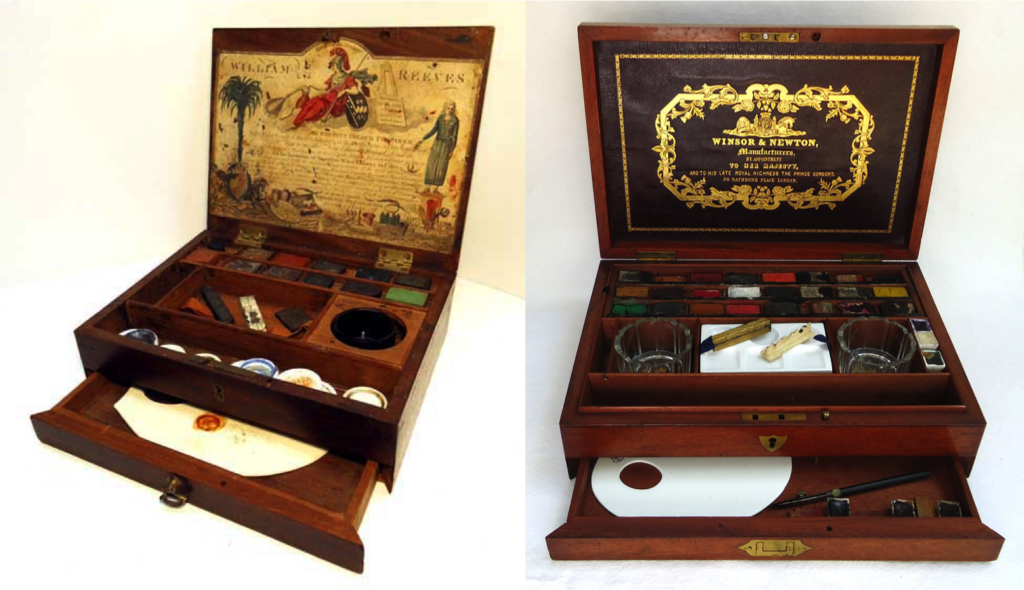
By the mid-18th century watercolour painting had become quite popular with the Victorians in England, especially with their practice of painting outdoors. To capitalize on this trend, both Winsor & Newton and Reeves sold paint boxes that were filled with everything an artist might need. They had cakes of paint, brushes, chalk/charcoal, vessels for water, and porcelain dishes for mixing colours [3].
Brushes and Paper
Brushes were fairly simple. They were made from horse hair with sable handles, sometimes with metal supports for the hair [4]. Brushes came in a variety of shapes according to the techniques artists were using.
Paper, on the other hand, came (and still comes) in a variety of different textures and from a few different processes. In the 1700s, paper was woven cotton that was moulded by using a method of pressing. There are three types of pressing: hot pressed, cold pressed, and rough. Hot pressed is very compressed and therefore does not absorb much watercolour paint [5]. It is the least textured paper and is suited for fine details as the paint doesn’t bleed as it is absorbed by the paper [6]. Cold pressed has a bit more texture and is suited for less precise work [7]. Rough is loosely compressed or even unpressed, has the most texture and gives paintings a more sketchy effect as the paint is absorbed the most compared to the other papers [8].
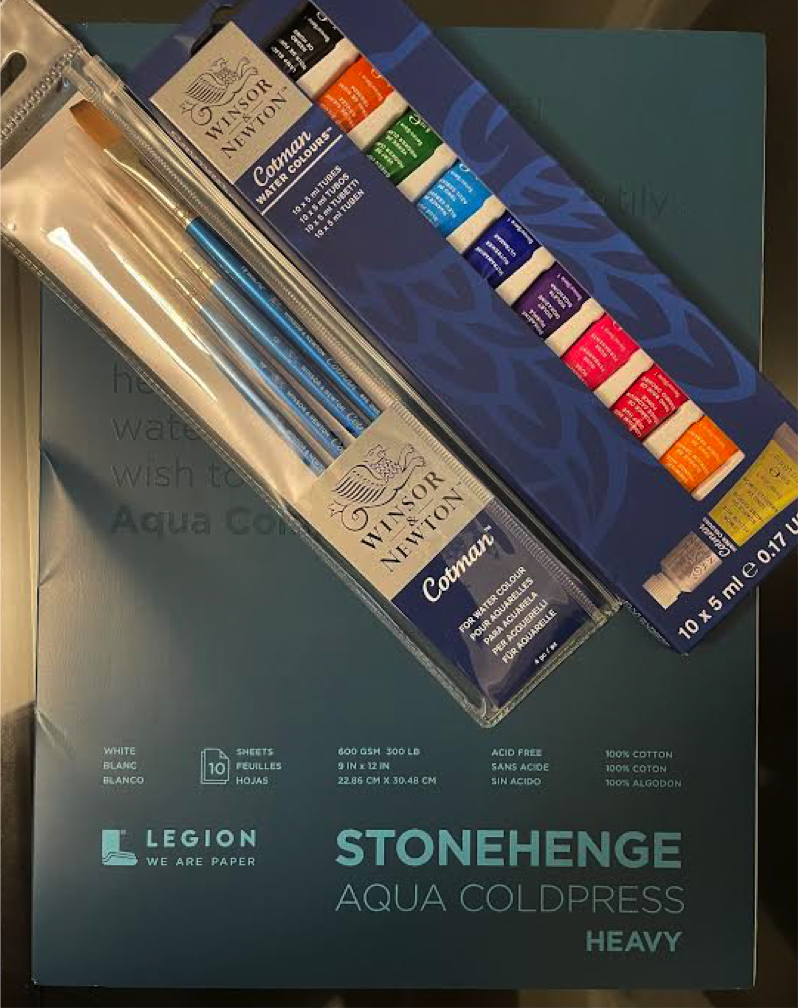
My Tools
I decided to continue the Winsor & Newton Legacy when choosing my watercolour paints and brushes. I have to admit that the historian in me was far too excited to be purchasing the same brand of paints that my Victorian predecessors had been able to. I chose the semi-liquid paints instead of the water soluble blocks as most reviews said it was easier to get brighter and deeper colours with them. I decided on a variety pack of brushes that should help me with most basic techniques. Paper was a harder choice to make. I went with “heavy” (rough) because according to one reviewer, it is good middle ground for both detailed and not detailed work so it gives me some room to experiment. I also went with a watercolour paper block instead of a ringed notebook or loose sheets. A block helps keep the paper from curling when using different techniques and eliminates the need to stretch the paper before using it [9].
Now that I have my tools, I am itching to get started painting!
- “History of Watercolour: Whereforth it Came,” https://watercolorpainting.com/history/.
- Elizabeth E. Barker, “Watercolour Paintings in Britain, 1750-1850,” The Met Museum, October 2004, https://www.metmuseum.org/toah/hd/bwtr/hd_bwtr.htm.
- Barker, “Watercolour Paintings in Britain”
- Barker, “Watercolour Paintings in Britain”
- “History of Watercolour.”
- Barker, “Watercolour Paintings in Britain”
- Barker, “Watercolour Paintings in Britain”
- Barker, “Watercolour Paintings in Britain”
- Johannes Vloothuis, “Understanding the Different Grades of Watercolor Paper,” The Artists Network, https://www.artistsnetwork.com/art-mediums/watercolor/understanding-the-different-grades-of-watercolor-paper/.
Leave a Reply
You must be logged in to post a comment.